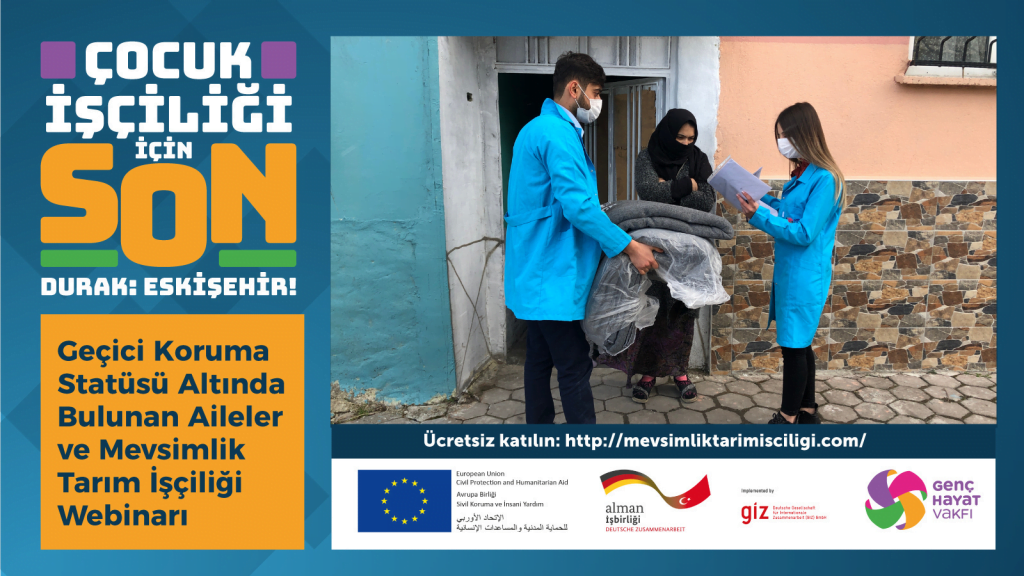
Last Stop For Child Labour: Eskişehir Project Webinar

Last Stop For Child Labour: Eskişehir Project Webinar

The webinar on “families under temporary protection status and seasonal agricultural work” has been arranged under Last Stop for Child Labor: Eskişehir! project to develop relations and cooperation, share best practices, share information and support the transfer of experiences with non-governmental organizations working on preventing and raising awareness on child labor in seasonal agricultural work, public institutions that have signed and implemented legal regulations on child labor, academicians who conduct research in the field .

The webinar has been planned for two consecutive days in March 9 – 10 having two sessions in each day; taking into account participation rates, attention spans and listening statistics.

The sessions held between 10.00 – 12.30 on March 9, the focuses were “Living Conditions and Combating Child Labor in Seasonal Mobile Agriculture” in the Opening Panel and “Problems and Search for Solutions for Improvement” in the Search Panel; In the Evaluation Panel held in two sessions between 13.00 – 15.30 on March 10, the focus was on “Good Practices in the Field of Civil Society and Looking to the Future”. With this layout,  the subject of “Families Under Temporary Protection and Seasonal Agricultural Work” was discussed comprehensively through both problems and solutions to these problems with an emphasis on cooperation.

The speakers were selected from public institutions (Ministry of Family Labor and Social Services, Eskişehir Provincial Directorate of Migration Management); non-governmental organizations (Genç Hayat Foundation, UNICEF, Kalkınma Atölyesi/Development Workshop, UNHCR, ILO, FLA, IPUD) and academicians who know the field extensively (Prof. Dr. Bülent GÜLÇUBUK / Ankara University; Prof. Dr. Pınar UYAN SEMERCİ / Bilgi Universityi; Prof. Dr. Saniye DEDEOĞLU / Muğla Sıtkı Koçman University; Prof. Dr. Kezban Çelik / TED University; Prof. Dr. Erol Nezih ORHON / Anadolu University; Doç. Dr. Figen ÇALIŞKAN / Eskişehir Osmangazi University).
To Reach Our Panelists' Works:

With the partnership of Eskişehir Osmangazi University and United Nations Population Fund, “Women and Girls Safe Space Project (Kadın Sağlığı Danışma Merkezi Projesi)”:

Facebook Page Twitter Page  Instagram Profile    LinkedIn Page

International Labour Organization (ILO):

https://endchildlabour2021.org/

"FOR YOUTH, TOGETHER WITH YOUTH!" PODCAST (TR)

"CHILDREN SHOULD BE CHASING THEIR DREAMS!"

The “Geçici Koruma Statüsü Altında Bulunan Aileler ve Mevsimlik Tarım İşçiliği” Webinar took place under the “Last Stop for Child Labor: Eskişehir!” project, which is co-funded by “The Federal Ministry for Economic Cooperation and Development (BMZ)” and “European Civil Projection and Humanitarian Aid Operations (ECHO),” and supported by “Local Initiative Fund in Turkey (LIFT)” under the “Community Centres and Local Initiatives Project (CLIP).”

The aims of the “Last Stop for Child Labor: Eskişehir!” project are to raise awaraness in combating the child labor in Eskişehir, where the migratory seasonal agricultural work is widespread; to provide support for the families working in seasonal agriculture in order to improve their working and living conditions; to refer them to the relevant public and non-governmental services in line with their needs and to monitor the school attendance status of the children who are under the risk of entering the cycle of child labor. 

Class Warming-up Activities

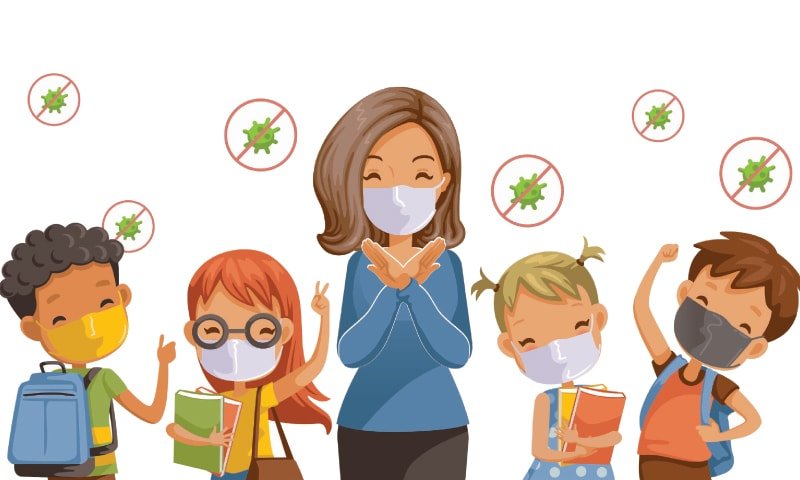
Students are returning to their schools with different feelings because they all have been through different experiences during the remote education process. Each student may have developed a different attitude towards the new pandemic-related rules such as wearing masks, social distancing or using disinfectants. Thereby, some students may be excited about returning to school and their friends, while others have some concerns regarding that matter. 

Utilizing group games and activities that can be applied in different contexts for different age groups will make it easier to focus on the moment while also preparing them for other events. They strengthen the in-group communication, enabling the participants’ ability to easily connect with the group.

They will provide a unique opportunity for students to re-orientate and balance their feelings; to come together and act as a group; and for you to to spend efficient time with your students in a safe classroom environment.

Classroom Contract

The children’s participation in the processes is significant while working with them since it supports their self-development while making it easier for you to cooperate with them. By preparing a classroom contract in which they all equally participated, you will help create an environment where the children communicate in a healthier way.

However, some rules may not be children’s ideas. It is essential that you propose and discuss topics such as wearing a mask, complying with the social distance and hygiene rules.

Preparing this contract will not only contribute to the setting up of order and respect in the classroom, but it will also develop their sense of freedom, democracy and equality. Furthermore, it will assist their adaptation to social life. 

While creating the contract, there are some important notes that should be taken.

Firstly, an emphasis on “we” is significant when talking to children. Therefore, instead of "you should be careful about the hygiene rules," you should make sentences like "we should be careful about the hygiene rules."

Secondly, the contract articles should be rules with positive sentences. When giving examples, you should use phrases like “we should quietly listen when others are speaking” instead of “we shouldn’t break in on their conversations when our friends or teachers are speaking.”

Thirdly, you should explain to the children that the activity aims not to impose new obligations but to create an environment where everyone can communicate better.

Lastly, you can show the children that you will follow the rules as well by signing the contract.

In the end, don’t forget to hang the contract in a visible place in the classroom.

A Song About Handwashing

Repeating what you’ve learned and applying it to your different senses throughout the process is an integral part of the learning phase.

Due to the pandemic, you may often find the need to remind the children of the hygiene rules and other precautions. In this case, giving reference to the classroom contract that you prepared with the children while doing activities involving them will make the learning and internalization process easier.

A common song for the class can be prepared about handwashing steps so that the children could gain the habit of “washing hands for at least 20 seconds to ensure hand hygiene.” You can also choose a song that you already know and alter it by adding a few new lyrics. It will enable them to create a classroom-specific product together while developing their sense of ownership since they are making a joint product and participating in a shared decision-making process. Furthermore, it will enable the application of handwashing rules, which is one of the essential hygiene-related rules. Lastly, don’t forget to hang the pictures showing the handwashing steps as below, where everyone can see them in the classroom.

Two Truths and a Lie

This game can be applied in the classroom, where each student is asked to think of two true and one false facts about themselves.

To guide the children during the game and make it easier for them to think, teachers can give examples such as “I like swimming (true), I like to observe nature (true), I adopted a cat (false).”

As students take turns to share their facts and others to find which one is false, they will learn a lot about each other while speculating and commenting. It will not only improve their communication skills, but it will also help them to focus on the whole by advancing their listening and paying attention abilities.

*This content is translated and summarized from an originally Turkish content, click here to view.

Digital Online Education

New Generation Education: Digital Learning

Digitalization is perhaps one of the most remarkable realities of our age. The COVID-19 pandemic process enabled us to be even more involved in the digital world. For a long time, we continued our business, education, and even the meetings we had with our loved ones online; and we continue to do so. Continuous engagement with technology changes the process of learning, especially for children and young people. 21st-century technologies are now replacing traditional classroom education practices. In this sense, as the Genç Hayat Foundation, we have researched some digital tools and prepared a great list that will help to keep the online learning process more efficient and fun.

1. Kahoot

Kahoot is an online platform designed to create quizzes and surveys. You can create tests with various question types, organize competitions individually or in teams, and carry out the evaluation process by turning it into a fun and interactive game.

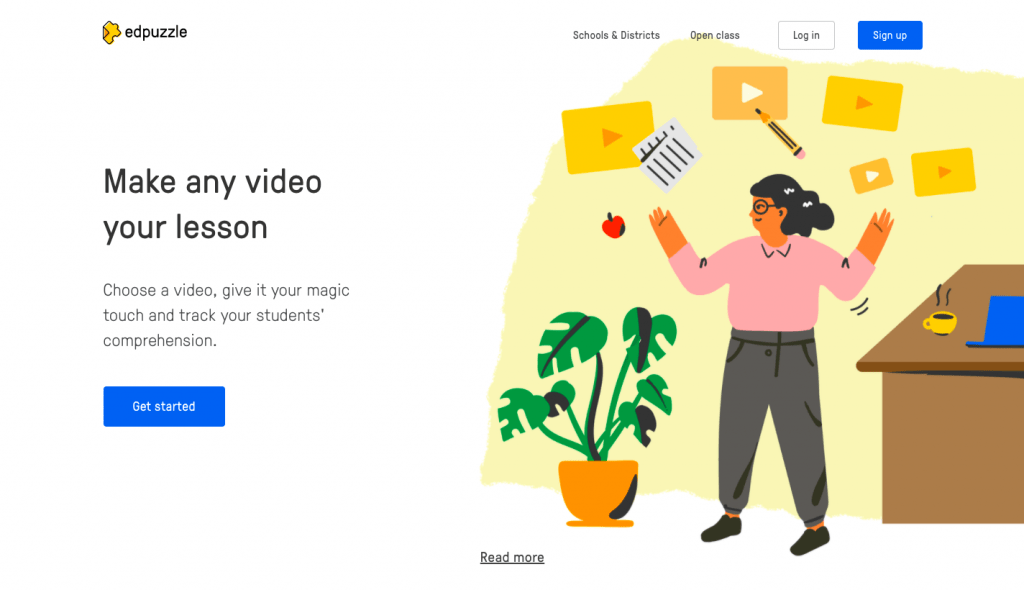
2. Edpuzzle

Edpuzzle is a content creation platform that helps you create videos. You can make the education process more enjoyable by preparing interactive videos where you can add audio, open-ended and multiple-choice questions and notes.

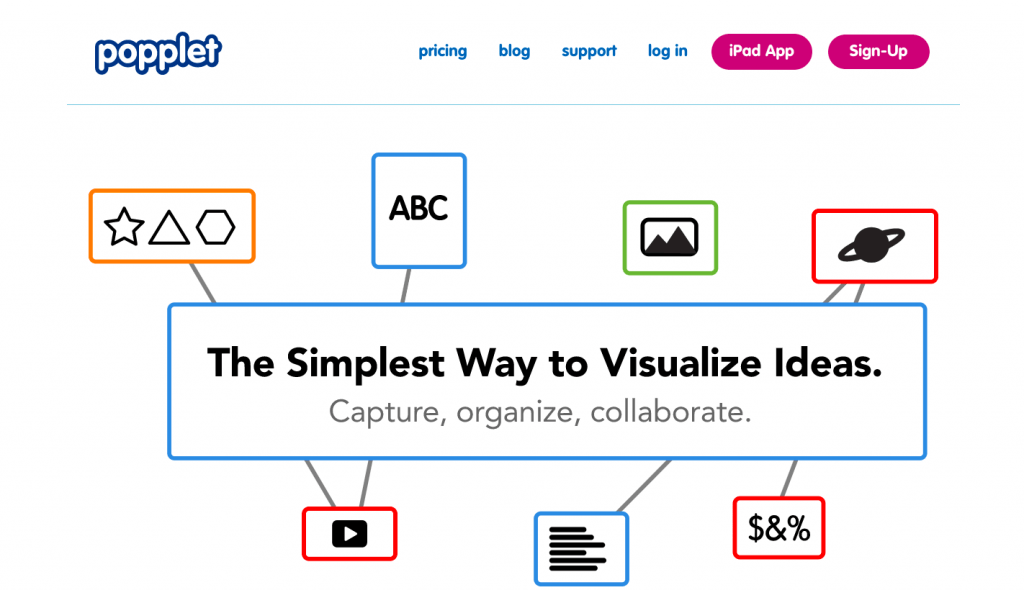
3. Popplet

Popplet is a great way to present ideas visually. Popplet helps you turn the ideas you have in the classroom or workplace and the topics you want to discuss into mind maps.

The mind maps consolidate the learning process of students, especially during the distance learning period, by establishing a relationship between the ideas and images because visualizing what you are telling helps your ideas to become more permanent and understandable.

4. Pixton

Pixton is a tool that helps you to easily create fun comics and cartoons. You can prepare great presentations, projects and assignments by making your content even more interactive with edits that will support visual memory strength.

5. ThingLink

With ThingLink, it is possible to make your image content even more responsive by creating tags on the images, when you click on the tag students will see more detail or different content regarding the topic. Thus, by increasing the interaction with new information, you can enable the students to focus more on subjects without being distracted.

Psychosocial Support During Crises and COVID-19

Psychosocial Support During Crises and COVID-19

Conditions such as living with uncertainty, health hazards, fear of losing someone and other significant changes in an individual’s life can have negative psychological impacts such as increasing levels of stress, anxiety, fear, distraction and depression.

Stress is a part of our daily lives, and strengthening our internal (coping skills, cognitive flexibility, hobbies, etc.) and external (our social environment, family, friends, etc.) resources is really important to overcome various stressful situations that we face throughout our lives.

This guide is designed to help reduce the possible psychological effects of the probable disasters and crises, support the socio-emotional development of children, and provide suggestions to strengthen their resources. COVID-19 outbreak is given particular emphasis since it has created a big change in our daily lives and significantly impacted our emotional and mental state.

Suggestions for Adults during the Periods of Stress and Anxiety

Find what comforts you:​

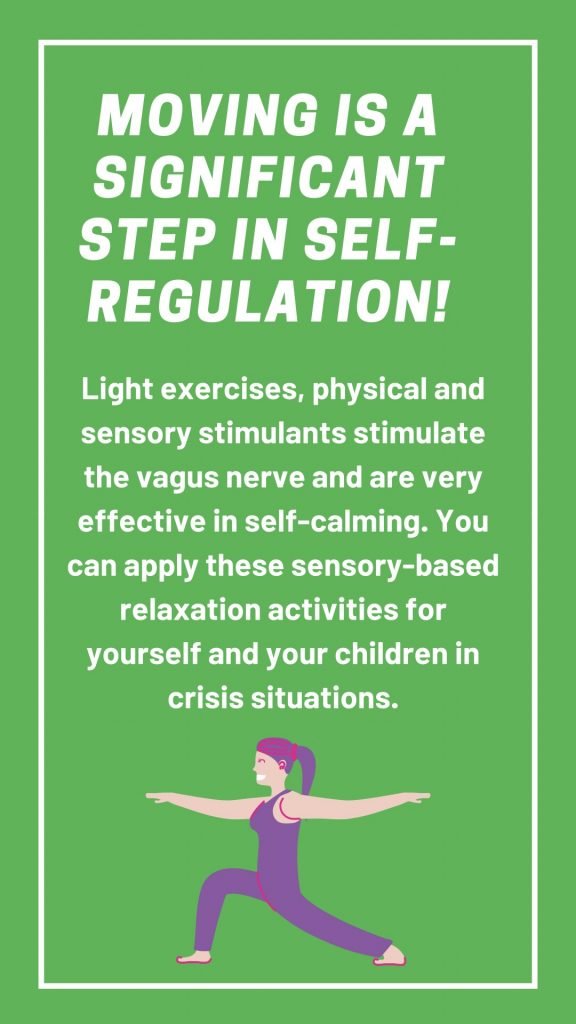
Under such stressful circumstances, you should try to focus on activities that could comfort you. These activities may include listening to music, reading a book, taking a walk, concentrating on your hobbies or attempting to find new ones. During intense and stressful moments, breathing exercises, progressive muscle relaxation techniques, light exercises or other physical activities could also help you relax.​

Flexibility and emotional self-regulation:​

Stressful events that we experience from time to time can now get even more intense due to the COVID-19 outbreak. Although we are all living under the same reality of pandemic, everyone experiences it differently. It is very natural to encounter psychological difficulties, feel angry, disappointed or depressed, or lose motivation during social isolation times. What matters is how you manage this process and what you do with these emotions.​

Connections

Keep in touch with your loved ones by strengthening your social networks. Having supportive people around you helps enhance your mental well-being. Connect with those in your social circle and strengthen these relationships. You need people who you can trust and fall back on in times of difficulty.

How to Approach Children and Teens: Recommendations

o-3 Age Group

The well-being of babies, especially the 0-3 years old children, is directly dependent on the well-being of the caregivers. For this reason, it is important to remember that you need to take action to care for your own well-being.

3-6 Age Group

The children between the ages of 3 to 6 need an “observe, play, soothe” approach. Especially regarding the pandemic, parents should be very clear while explaining terms like viruses, microbes and give tangible examples. You can try to instrumentalize games while describing the conditions.

6-12 Age Group

For 6-12 years old children, it is important to adopt an “observe, explain, support” approach. Make clear and accurate explanations while talking to them. It is essential to create an atmosphere of trust and let children know that they can easily ask you questions. Do not judge them about their questions and behavior.

12-18 Age Group

While communicating with 12-18 years old children, the roadmap of “observe, understand, allow” can be followed. The psychological effects of puberty, such as identity crises and anxiety about the future, could increase due to the new emerging conditions of the pandemic, such as problems regarding access to education or cancellation of exams. Therefore, during this period, they may need to know and hear that you will be there for them under any circumstances. Support them without threatening their individualities or freedoms. Let them solve their problems alone while making them feel that you will be there for them when they make a mistake. It is also important to respect children's privacy during these times, especially since the whole family is at home during the lockdowns.

How to Support Children's Stress Management?

ASK QUESTIONS

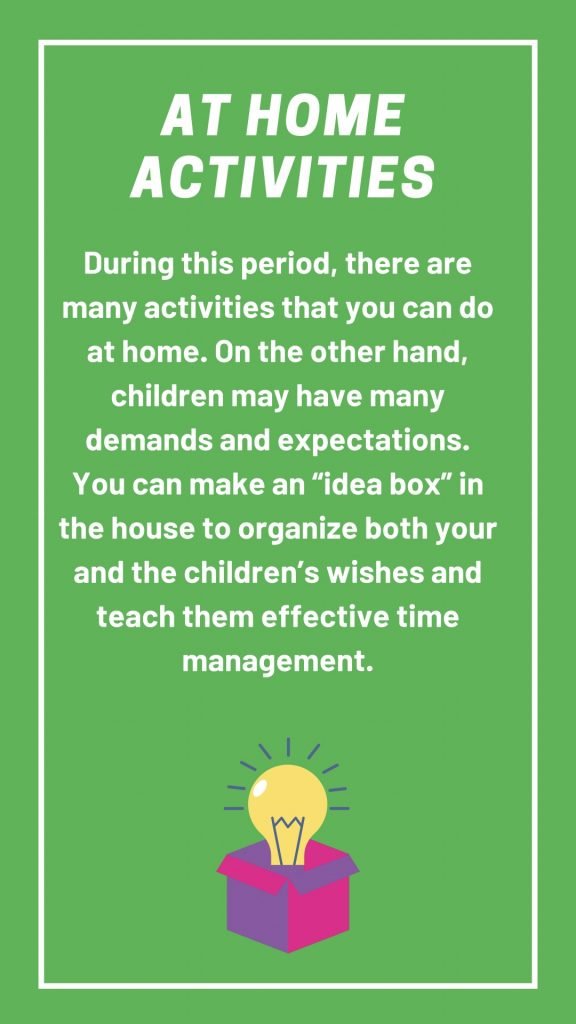
To be able to understand how your child is feeling, you need to ask questions to them. You can turn this into a game for younger children and find an entertaining way for them to express themselves.

UNDERSTAND AND ACKNOWLEDGE

Especially challenging, uncertain and abnormal situations can cause teens and children to feel anxious or scared, which in return can cause them to react differently than usual. When you come across such emotional reactions, make them feel well understood. Tell them that it is normal that they feel that way.

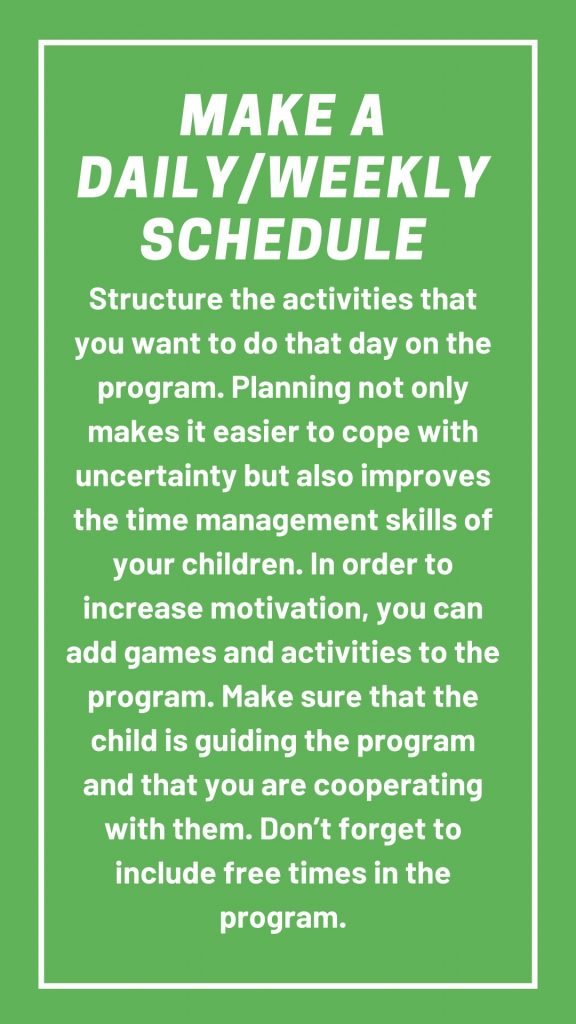
PLAN

Planning helps alleviate anxiety as it reduces uncertainty.

DO NOT FORGET ABOUT YOURSELF AND INCLUDE YOUR FAMILY TO THE PROCESS:

It is very difficult to understand children’s feelings without understanding yours first. Ask yourself questions about how you feel.

HELP THEM TO LIMIT THE MEDIA CONTENT RELATED TO THE PANDEMIC

On this specific occasion, the COVID-19 pandemic made us even more exposed to the digital media than usual. Take special precautions to prevent children and teens from being subject to the information pollution in the media and negative visual contents that you cannot control. 

DO NOT HESITATE TO GET SUPPORT!

Relaxation and Self-Regulation Exercises to Support Your Children

What About After COVID-19? How to Prepare Children for Normalization Period

During the pandemic, we got used to spending time together with our families more than ever. The normalization period that we are currently living in, also referred to as “the new normal,” might be challenging for some; and the perception that the outside world is not safe socially and physically can be a significant source of stress. Therefore, it is crucial to apply the transition step by step.

While our old routines are coming back, we are also required to adopt some new habits. For instance, socialization now includes wearing masks in public transportations, workplaces and social areas, disinfecting the used items and keeping a social distance from people.

You can use the techniques mentioned above while preparing yourself and your children for the normalization period.

When to Get Professional Help?

You should get support from an expert whenever you think you need it. However, observe your child more carefully and consult an expert, especially for:

  • Children with previously diagnosed with attention deficit and hyperactivity disorder,
  • Children with remaining unresolved problems after the pandemic, such as attention deficit, clumsiness, memory loss and hyper-stimulation,
  • Children who are on psychiatric medication,
  • Children diagnosed with specific learning difficulties,
  • Children with special physical and mental needs,
  • Children who lost a family member,
  • Children with a family member diagnosed with COVID-19,
  • Children who are suspected of using alcohol, cigarette or other substance.
  • Children with long-term malaise, loss of motivation, attention and memory problems, appetite and sleep troubles persist throughout the day.

Reminder!

  • This pandemic taught us to be more flexible and open to new ideas, realize the importance of social relationships, stay and live in the moment, the importance of our emotions, overcome losses, and survive in such a prolonged, intense, stressful situation.
  • Life goes on. We need to be ready and prepared for new, unexpected situations and changes. Let’s create an emotional emergency bag and fill it with our resources so that we can open and look at it when we need it, especially during crises and other difficult times like this.
  • Remember, you need to be “okay” first to be able to help and support those around you.

*This content is translated and summarized from originally Turkish content:

Psycho-social Support Guidebook

Children’s Wellbeing and Pandemic

Helping Child Development at Home: Spending Time with Children in Kitchen

Helping Child Development at Home: Spending Time in the Kitchen

With COVID-19 outbreak children spend more time indoors, most of it in front of the screen. In order to support their mental and physical developments, it is important to balance on & off screen times. Parents can try to make time spent together more enjoyable and productive by preparing various entertaining indoor activities for children.

It is very beneficial for children to practice what they learn at school in their daily lives, and to take responsibility for housework such as folding laundry or cleaning at an early age to help their development and the continuity of their learning processes.

Cooking with Kids

Spending time in the kitchen with children at an early age helps them understand how the responsibilities of the kitchen belong to everyone according to their age.

Including children in the cooking process helps to support their mental and physical development and contributes to their growth as individuals with high self-confidence. 

The process can become very entertaining for both parents and children when necessary security measures are taken. 

The benefits of cooking in the kitchen with your children:

  • Strengthens the family ties. 
  • Helps the children to expand their vocabularies.
  • Creates an environment where children can learn by experience.
  • Boosts their self-confidence.
  • Strengthens their mathematical and logical reasoning skills.
  • Strengthens their reading and comprehension
  • Strengthens their writing skills.
  • Strengthens their fine motor skills and helps to improve them. 
  • Helps to improve their five senses.
  • Improves their hand-eye coordination.
  • Strengthens their algorithm developing and problem solving skills.

What to be Careful About?

  • Do not place sharp kitchen utensils in places where children can easily reach.
  • Do not leave the children alone in the kitchen while cooking.
  • Choose simple, easy and straightforward recipes that are convenient for your children’s age.
  • Explain their duties in a simple and clear way. Describe what you are doing step by step.
  • Explain how they can use hot tools such as stoves and ovens in accordance with their ages.
  • Do not get angry with your children if the kitchen is messy, you can tidy the kitchen up together when the cooking is done.

*This content is translated and summarized from an originally Turkish content, click here to view.

The Most Common Type of Bullying in the Digital Age: Cyberbullying

The Most Common Type of Bullying in the Digital Age: Cyberbullying

What is Cyberbullying?

Cyberbullying is the constant and repetitive use of electronic devices (such as tablets, phones, computers) to harm or hurt someone else. It is one of the most common online risks that teens and children are exposed to and/or practice themselves. As the time spent in the digital environment lengthens, the possibility of facing online risks and cyberbullying increases even more. The online world that offers many opportunities can also be used as a tool to harm others.

Where Can Cyberbullying Happen?

  • Social media channels
  • Messages
  • Phones (video call, text, voice call)
  • Online chat rooms
  • Online games
  • Group chats
  • E-mails
  • Forums
  • Blogs
  • Websites

Which Behaviors are Considered as Cyberbullying?

  • Mocking, name-calling, gossiping, threatening
  • Excluding from games, blogs or group messages
  • Hacking someone else’s accounts
  • Posting on fake accounts
  • Posting someone’s pictures without their consent
  • Sending texts on behalf of someone else
  • Following someone’s accounts on social networks in a disturbing way
  • Spreading false information about someone on social media
  • Posting embarrassing information or photos of a person on social media
  • Constantly making negative and unwanted comments under someone else’s posts
  • Sending emails or messages that contain viruses
  • Downloading information that contains copyrighted and illegal content

How Can We Protect Ourselves from Cyberbullying?

  • Not opening spam messages and emails
  • Connecting only with people you know in real life o digital platforms
  • Staying away from pop-up games and trivia
  • Not clicking advertisements on websites
  • Using antivirus or security applications
  • Not sharing personal information such as passwords, phone numbers, adresses,school, email adresses online
  • Checking security settings of applications
  • Generating complex passwords and changing them every six months
  • Not believing the information shared on the internet immediately, questioning and confirming it from several sources

Cyberbullying leaves a digital trace behind!

You are not alone if you are experiencing cyberbullying!

You can stop cyberbullying and cause a change in the world if you recognize it!

Genc Hayat Foundation Infographics are Published!

Since our foundation in 2008; we support the development of children and teenagers. We encourage them to be fair minded, self-confident and questioning. We strive to stimulate their inner creativity, and work for them to become pioneer individuals who respects human rights and contribute to humanity without discrimination! We work to prevent child labor, promote education for children & employment opportunities for youth, and increase awareness for social harmony.

Now we invite you to raise awareness with us!

We have gathered a small infographic that shows our works; help us reach more children and teenagers by sharing it!

Education For Children!

Every year, April through October, thousands of seasonal agricultural workers are migrating to various regions of Turkey. Children who go with their families, have to live in unsafe conditions without basic facilities such as clean water, hot food and hygiene. In addition to poor living and working conditions, children in seasonal agricultural work lose a third of their school year, and many have to drop out of school altogether.

FROM 720,000 CHILD LABORERS IN TURKEY, 30.8% ARE WORKING IN AGRICULTURE

IN 5-14 AGE GROUP, 64.1% OF CHILDREN WORK IN AGRICULTURE

THE RATE OF DROPPING OUT OF SCHOOL INCREASES FROM CHILDHOOD TO YOUTH!

*TÜİK, 2019

OUR WORKS IN THE LAST SEVEN YEARS!

2014
Our journey started in Düzce with "In A Nutshell" project! We visited houses, tents, barracks; we knocked on doors and said "Children belong in our summer schools, not in fields.". We have worked to keep children away from harvest fields and provide them an alternative to support their development.
2014
2015
Families, teachers, muhtars, garden owners, agricultural business intermediaries, public and private sectors... We said "Everyone is part of the solution" and we proceeded together!
2015
2016
It was a long journey for the children, from their homes to the cities where the harvests started; cotton, onion, apple, hazelnut ... This time we were welcoming them in more cities; We were with them in Düzce, Sakarya and Ordu.
2016
2017
We said "If only children never had to leave where they live."; we went to Şanlıurfa, one of the cities with most immigrants . We worked to support children's education and wanted them to learn while having fun. Most of all, we produced solutions for youth employment by preventing school drop outs.
2017
2018
We published awareness films and documents with our field experience, and offered suggestions and contributions to national and international committees.
2018
2019
By including Syrian refugees in seasonal agriculture, we started our work in Eskişehir.
2019
2020
We continue to take project and resource development steps for more inclusive and sustainable works. We are working for the best interests of children to improve the conditions that are getting harder due to the pandemic.
2020

Seize Your Dreams Through Sports Project Film is Published!

Genç Hayat Foundation launched “Seize Your Dreams Through Sports” project in Şanlıurfa with the support of Adidas Turkey and the Ministry of Labor and Social Security. It was aimed to increase the participation of children who are disadvantaged  by supporting their development and engagement with sports.


In the project lasting 6 months; body percussion and rhythm work with children, capacity building with P.E. teachers, mapping for the sports facilities in the region, guidance activities, teacher – student practices, role model meetings and sports festivals were held.


In its 10th year of its establishment, the foundation works on development of  disadvantaged children in child labor and continues to produce studies and solution with all the power in different provinces of Turkey to support their education.